How to Plan a Wedding Without Losing Your Mind (or Your Budget)
A wedding planning system built around what actually goes wrong, guest list chaos, vendor spreadsheets, the budget that quietly doubles. Plan smart, not frantic.
Engagement is supposed to be the happy part. Then someone hands you a 47-tab wedding spreadsheet from Pinterest, your future mother-in-law starts asking about the seating chart, and suddenly you're staring down a 14-month logistics project for 130 of your closest friends, family, and people you haven't talked to since 2018.
The wedding industry profits from your panic. The bigger your overwhelm, the easier it is to upsell you on the floral package, the day-of coordinator, the customized monogram napkins. Calm couples save money. Stressed couples spend it.
The trick to staying calm, and staying on budget, isn't planning harder. It's planning in the right order, with tools that don't pretend a wedding is a single event. It's six months of dozens of small decisions stacked on top of one big celebration, and the couples who treat it that way come out the other side with money in the bank and their relationship intact.
Here's the playbook.
The first decision isn't the dress. It's the guest count.
Almost every line item in your wedding scales with the guest count. The venue capacity, the catering minimum, the bar tab, the invitations, the favors, the chairs, the linens, the cake size, the photographer hours, the shuttle bus. Even your dress alterations get pricier if the wedding is bigger, because the timeline gets tighter.
Couples who decide on a venue before they finalize a guest list end up either:
- Paying for a venue too big for their actual list (and feeling weird in an empty room)
- Cutting their list to fit a venue they fell in love with (and starting family drama)
- Bursting the venue capacity and paying overage fees plus a tent rental
The right order is: rough guest count first, budget second, venue third. Not the other way around.
A rough guest count doesn't mean a perfect list. It means three columns: A-list (must invite), B-list (would love to invite), and "depends on the venue and budget." When you sit down with a venue contract, you'll know exactly which tier of guest list it accommodates, and you'll stop saying yes to spaces that don't actually fit your wedding.
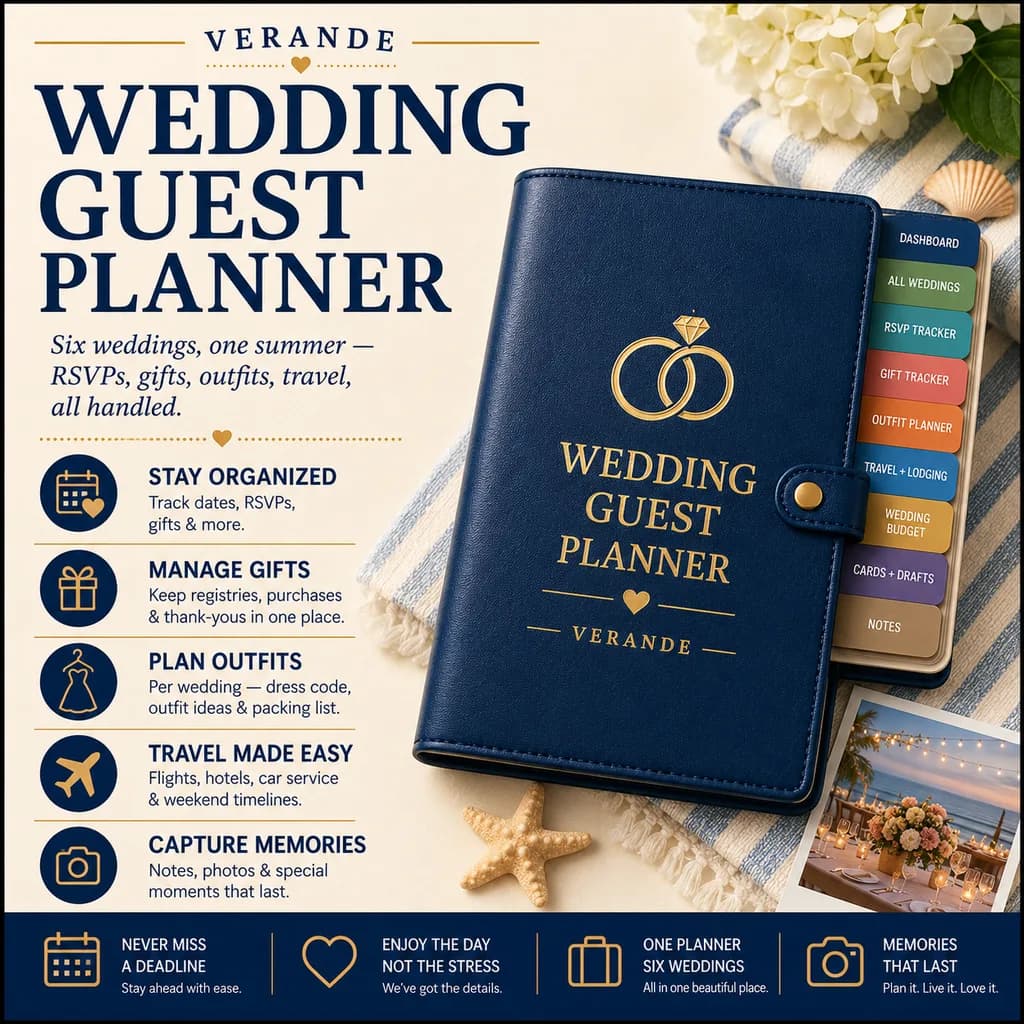
The Wedding Guest Planner is built to handle this from day one. A/B/C guest tiers, RSVP tracking when invitations go out, meal selections, dietary restrictions, seating, plus-one tracking, and the painful but necessary "did they ever respond?" column. Couples who use it tell us the guest list took 30% less time and caused 80% less family conflict, because every decision had a clear paper trail instead of a memory of who said what at Thanksgiving.
Build a budget that includes the line items nobody warns you about
The honest wedding budget is roughly 30% more than the one your venue coordinator helps you build. Not because they're lying, because they're scoping their world (venue, catering, bar) and not yours.
Lines that quietly add up and that almost every couple forgets:
- Marriage license and officiant. Together, $300–$1,200 depending on where you are.
- Hair and makeup trials. Plus the day-of. Plus the bridal party. This is rarely under $800.
- Vendor tips. A real wedding has 8–14 tipped vendors. Plan $500–$1,500.
- Welcome bags, signage, favors, escort cards. Death by a thousand $40 purchases.
- Bridesmaid and groomsman gifts. $50–$150 each, times the party size.
- Rehearsal dinner. Often forgotten until 60 days out.
- Day-after brunch. Same.
- Alterations. $200–$800 for the dress alone.
- Postage. $1–$2 per invitation, then again for the response cards, then again for thank-you notes. A 130-person list is easily $500 in stamps.
- Last-mile chaos. The Target run for safety pins, the emergency umbrella purchase, the Uber surge on the morning of.
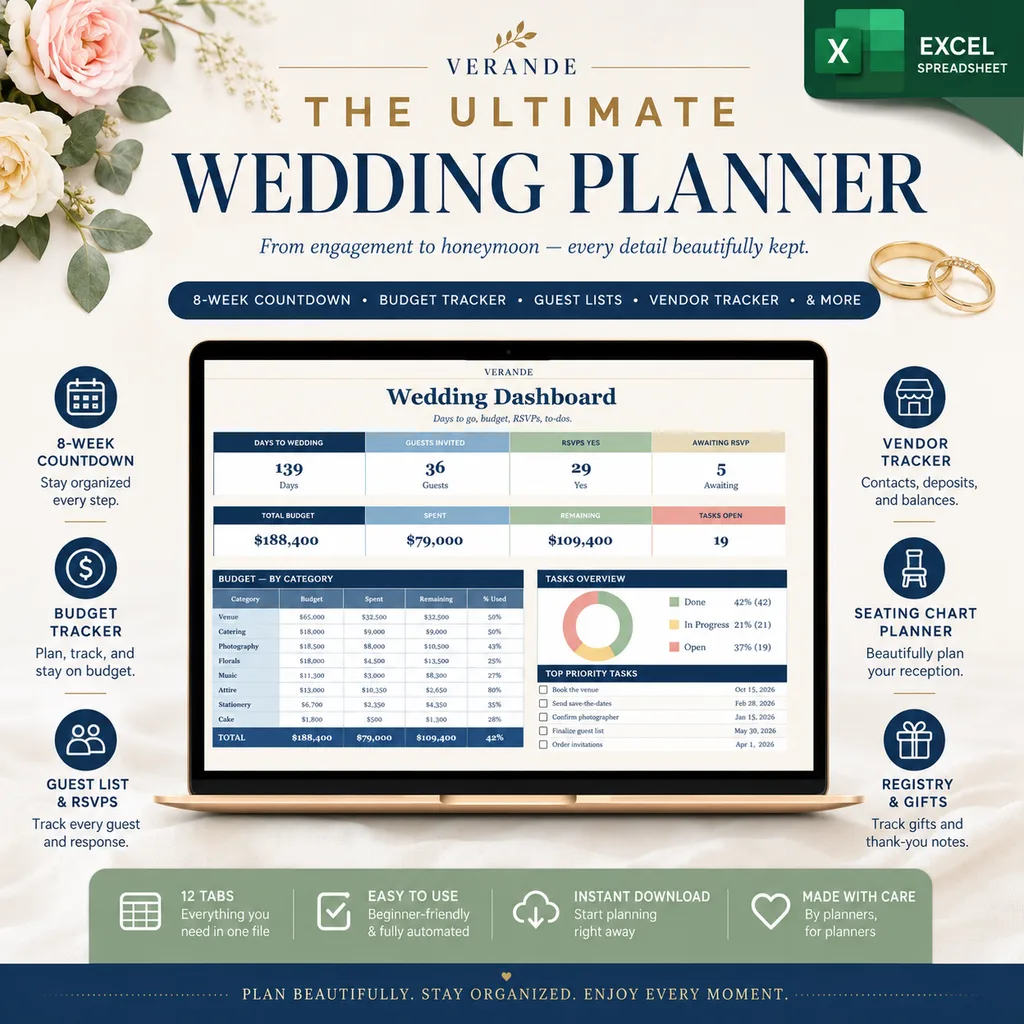
The Bride's Wedding Planner Spreadsheet bakes all of these into the budget structure so you're not discovering line items 60 days out when you have zero room to flex. It tracks deposits paid, balances owed, due dates, and shows the running gap between your "we said yes to this" and your "we set this as our cap." That gap, watched weekly, is what keeps a 14-month engagement from ending in a $9,000 budget overrun.
Vendors are 80% of your wedding cost. Manage them like contracts.
You will sign somewhere between 8 and 15 vendor contracts before the wedding. Venue, catering, bar, photographer, videographer, florist, DJ or band, baker, hair and makeup, transportation, officiant, rental company, planner if you have one, stationer, sometimes a lighting or photo booth vendor.
Each contract has: a deposit amount, a balance due date, a cancellation policy, a meal requirement (yes, your vendors need to eat), a specific COI insurance requirement from the venue, an arrival time, a tear-down expectation. Miss any one of those details and you're either eating a fee or fighting with someone on your wedding day.
The single best move you can make: a vendor master list with every contact, every payment date, every clause, every signed PDF in one place. Not a binder of emails. Not a Google Drive folder you have to search through. One row per vendor, every relevant fact in columns, sortable by what's due next.
The Bride's Wedding Planner Spreadsheet linked above includes this vendor tracker as a core tab, payment milestones, contact info, the questions you need to ask, the contract clauses worth re-reading 30 days out. Most fights between brides and vendors happen because something was assumed and not written down. The spreadsheet is the written-down version.
The seating chart is the boss fight. Practice in advance.
If you're hosting 80 or more guests, the seating chart will take longer than you think and cause more drama than you expect. There will be the recently-divorced couple, the friend who can't be at the same table as her ex, the family members who haven't spoken in 11 years, the work friends who only know each other and will sit silently if separated, and the random plus-ones who need to be parked somewhere reasonable.
Two rules:
- Don't do the seating chart on paper. Every change cascades. Use a tool where moving one person to another table updates the visualization in real time.
- Start six weeks out, not six days out. The first draft will be wrong. The second draft will reveal new problems. The third draft is the one you actually use.
The wedding planner above handles this with a digital floor plan that knows your table count, capacity per table, and dietary tags so you don't end up with five gluten-free guests at the only table the kitchen wasn't told about.
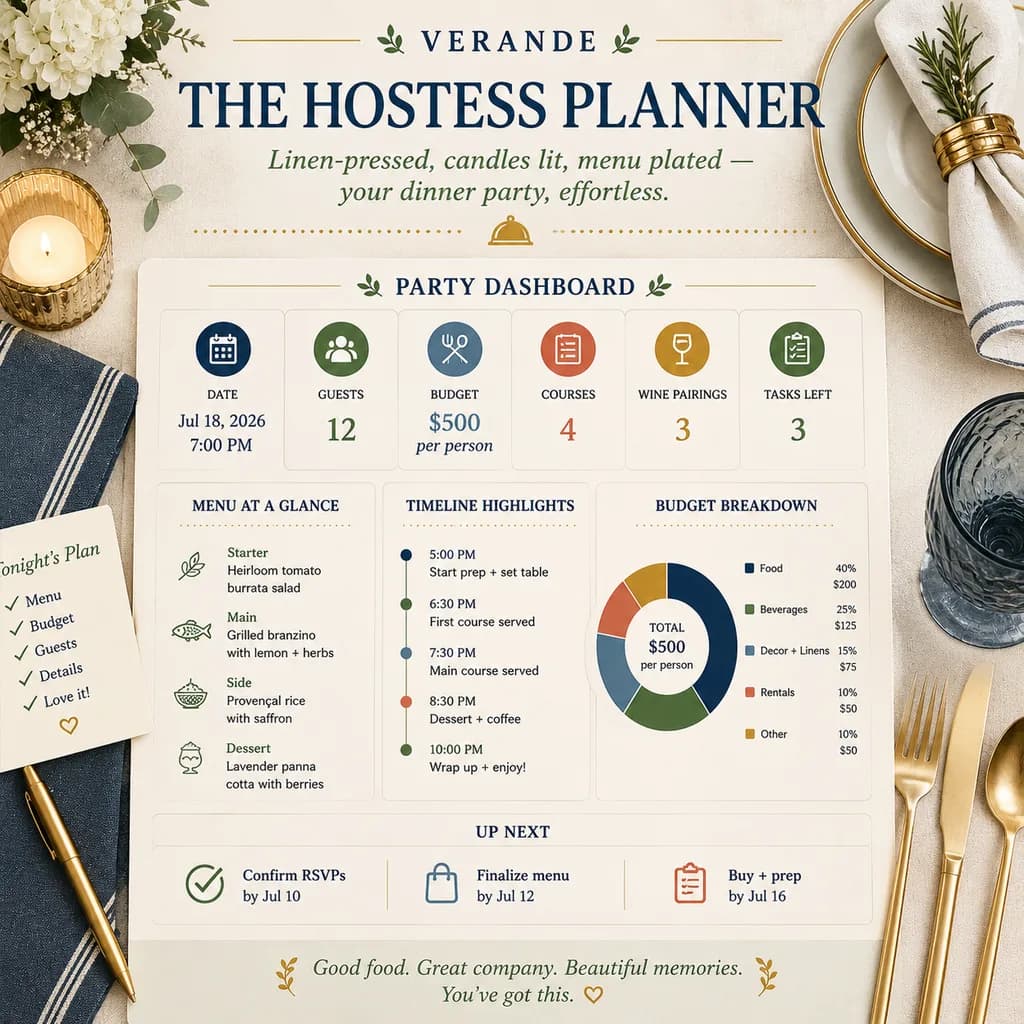
If you've never hosted a dinner-style event, the Dinner Party Planner Spreadsheet is actually a beautiful primer for the smaller mechanics, menu pairing, dietary tags, seating logic, cook timing. The wedding day operates on the same principles, just bigger. People who've hosted a few real dinner parties before their wedding are noticeably calmer the week of.
Build your week-of timeline now, not the week of
The single highest-leverage thing you can do at the 60-day mark is build your day-of timeline. Not a vague hour-by-hour, a real one, with vendor arrival times, hair and makeup blocks, photo session start times, ceremony processional order, cocktail hour transitions, first dance, toasts, cake cut, last dance, send-off.
Print three copies. Email it to your photographer, planner (or maid of honor playing planner), and venue coordinator. Walk through it once out loud. Adjust.
Couples who do this 60 days out have a wedding that runs. Couples who do it 6 days out have a wedding that happens to them.
Closing thought: protect the joy
The whole point of a wedding is the marriage. The flowers and the seating chart and the perfect playlist are real, but they're scaffolding. The couples who look back fondly are not the ones with the prettiest invitations. They're the ones who didn't fight about the invitations.
A planning system, a real one, not a Pinterest mood board, buys you that. It moves the decisions out of your head and into a place you can actually see them, so you and your partner stop arguing about whether you remembered to follow up with the caterer (you did; it's on row 47).
Start with the planner that thinks like a wedding planner
The Bride's Wedding Planner Spreadsheet is the most complete starting point, budget, vendors, timeline, guest list, seating, day-of schedule, all integrated. Pair it with the Wedding Guest Planner for serious guest-list management if you're hosting more than 100 people. Together they cover 90% of where weddings go off the rails, and free up the headspace for you to actually enjoy the year of your life you've been waiting for.
Brides
Vendor contacts, wedding timeline, seating logic, and a budget tracker, the whole day, organized well before it arrives.