The Side Hustle Income Tracker Every Freelancer Needs in 2026
If you're freelancing, side-hustling, or selling on Etsy and not tracking income properly, you're paying too much in taxes. Here's the spreadsheet system that fixes it.
If you made $14,000 from your side hustle last year and paid taxes on $14,000, you got hosed.
The single most expensive mistake freelancers and side hustlers make isn't undercharging. It isn't bad client work. It isn't even missed deadlines. It's failing to track income and expenses properly, then handing the IRS a tax return based on gross revenue instead of net profit. The freelancer who tracks correctly pays tax on $6,800 of profit. The freelancer who doesn't pays tax on $14,000 of revenue. Same business, different documentation, $1,500 to $2,400 difference in what you owe in April.
This isn't bookkeeping. It's the highest-leverage hour you'll spend on your side hustle this year.
Here's the tracker system every freelancer needs.
Track income the day it hits, not the day you remember
The first failure mode is timing. Freelancers tend to "catch up" on bookkeeping quarterly or, worse, in March, panicking before the tax deadline. By then, half the Venmo payments are unlabeled, the Stripe payouts don't match invoices, and the cash you got at a craft fair in August might as well not have existed.
The rule is simple: every dollar gets logged the day it arrives, with three fields filled in:
- Source, client name, marketplace, platform (Etsy, Stripe, Square, Venmo, cash)
- Gross amount, what they paid you, before any platform fees
- Net amount, what actually landed in your bank after fees
If you can't fill all three fields in 30 seconds, you'll skip it. So the tracker has to be that fast. No multi-tab data entry, no double-categorizing, no "I'll add the project notes later." Pull out your phone, type three things, done.
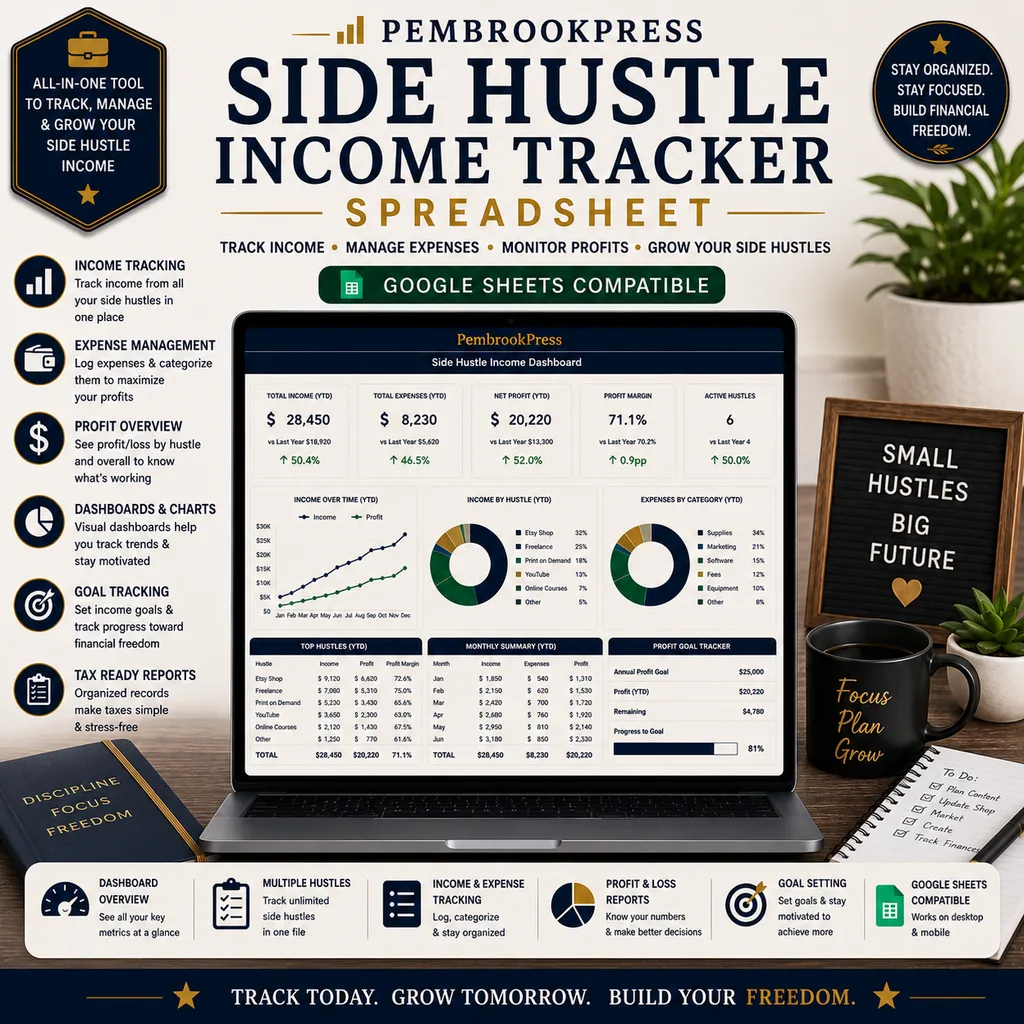
The Side Hustle Income & Expense Tracker is built specifically for this, single row per transaction, dropdowns instead of typing, running totals that update as you go. The dashboard shows you, in real time, what you've made this month, this quarter, and year-to-date. No reconciling, no surprise.
Separate the money. Stop running your side hustle out of your checking account.
This is the move that separates hobbyists from people who actually keep what they earn.
Open a free business checking account. Almost every credit union and online bank offers one with no minimum. Get a debit card linked to it. From now on, every client payment, every marketplace payout, every Venmo for services goes to that account. Every business expense, supplies, software, the portion of your phone bill that's for work, the mileage if you drive for the hustle, comes out of that account.
Three things happen immediately:
- Your bookkeeping becomes one bank statement instead of three. Open the account, export the CSV, you're done.
- You can see, at any moment, how much your business has actually made. No more "I think I'm doing okay" feelings. Real numbers.
- The IRS audit risk drops dramatically. Commingled funds are the single biggest red flag on a self-employed return. Separated funds make an audit, if it ever comes, a 20-minute conversation instead of a six-month nightmare.
Pay yourself from the business account to your personal account on a schedule, once a week, every other Friday, whatever rhythm works. The transfer is your "paycheck." What stays in the business account is for taxes, expenses, and reinvestment.
Capture every deductible expense (especially the ones you forget)
Most freelancers track the obvious expenses, software subscriptions, supplies, equipment. They miss the ones that actually move the needle. The forgotten expenses are usually 20 to 40 percent of total deductions for an average side hustle, and they all reduce your tax bill dollar for dollar against your highest marginal rate.
The list of deductions freelancers routinely forget:
- Home office, if you have a dedicated workspace, even a corner, you can deduct a portion of rent/mortgage interest, utilities, internet, and repairs
- Mileage, every drive to a client meeting, post office, supplier, networking event. The 2026 IRS rate is around $0.70/mile. A photographer driving 4,000 miles a year for shoots is leaving $2,800 in deductions on the table if they don't track it.
- Phone and internet, a percentage based on actual business use
- Education, courses, books, podcasts (paid), conferences, even relevant Substack subscriptions
- Bank and platform fees, every Etsy listing fee, Stripe processing fee, PayPal cut, monthly bank fee
- Software, the obvious ones plus the small stuff (Canva, Zapier, scheduling tools, password managers)
- Marketing, ads, business cards, samples you mailed, swag, even the website hosting bill
- Professional services, accountant, lawyer, the photographer who took your headshot, the designer who built your logo
- Insurance, if you carry professional liability or business insurance, it's fully deductible
- Self-employed health insurance, premiums for you, your spouse, and dependents, deductible against your business income
The Side Hustle Income & Expense Tracker has a category list built around what self-employed people actually spend money on, with a notes column for the receipt reference and a mileage log on a separate tab. It's the difference between handing your accountant a clean P&L and handing them a shoebox.
If you sell on a marketplace, track the platform separately
If you're an Etsy seller, an Amazon FBA seller, a Shopify store owner, or a print-on-demand operator, the generic side-hustle tracker isn't enough. Marketplace bookkeeping is its own beast, listing fees, transaction fees, payment processing, shipping labels, advertising, refunds, sales tax remitted on your behalf in some states but not others. A normal income/expense template flattens all of that into a noise pile.
The Etsy Seller toolkit was built specifically for the marketplace shape: per-listing profit calculation, fee breakdown that matches what Etsy actually charges, inventory tracking, and a real "what does this product actually make me after every fee" number. People who use it find that 15 to 25 percent of their listings are actually losing money once all the fees are counted, and the rest is making more than they thought. You can't make pricing decisions until the math is honest.
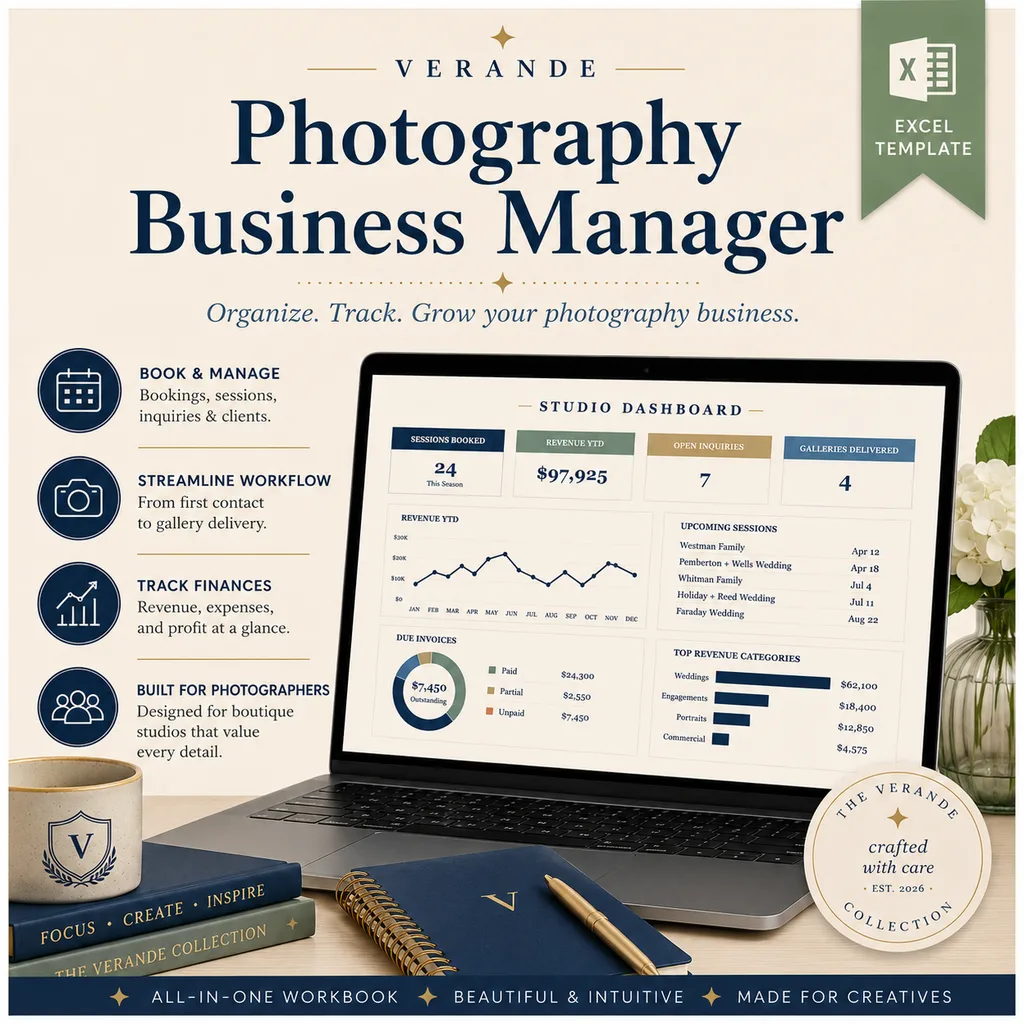
If your hustle is photography, the bookkeeping shape is different again. You've got session deposits, second-shooter splits, gear depreciation, mileage between venues, prop costs, editing software, and a workflow where one wedding might span three months of bookkeeping. The Photography business toolkit handles this, per-shoot profitability, gear log, mileage by session, and a P&L that lines up to how photo businesses actually run.
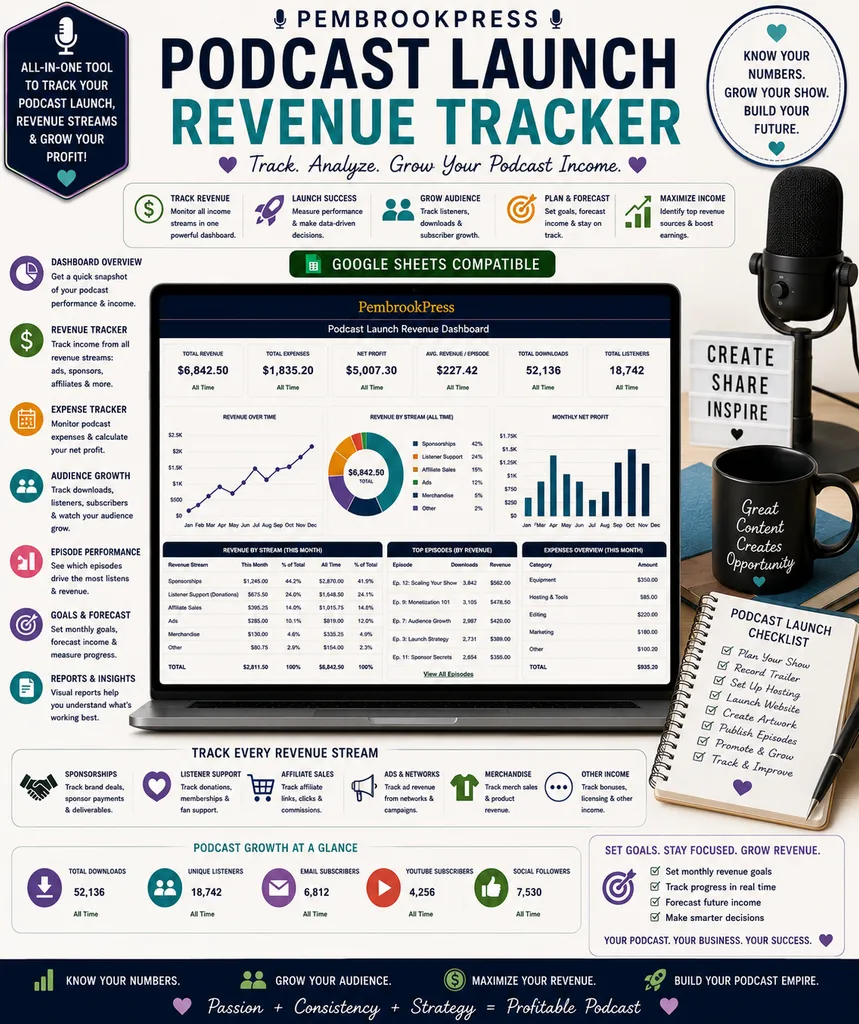
If you're building a podcast as a business, the revenue mix is even messier, sponsorships, listener support, affiliate links, paid subscribers, live event tickets. The Podcast Launch & Revenue Toolkit tracks every revenue stream separately so you can see which one is actually paying for itself and which one is eating your time for $14 a month.
The point isn't that you need ten templates. The point is that one generic template can't serve a multi-stream creative business. Pick the one that matches the shape of the money you make.
Pay your estimated taxes quarterly. Or get punished.
Here's the part most first-year freelancers don't know until they get the bill: if you owe more than $1,000 in taxes at year-end as a self-employed person, the IRS charges you penalties for not paying quarterly. The penalty is small per quarter but compounding, and most freelancers find out about it for the first time in April when their accountant adds a line they weren't expecting.
The fix is simple. The day a client payment hits your business account, transfer 25 to 30 percent of it to a separate savings account labeled "taxes." When the quarterly deadlines hit. April 15, June 15, September 15, January 15, you pay your estimate from that account. Direct from IRS Direct Pay. Takes five minutes.
If your effective tax rate ends up lower than 25%, the leftover is a refund or rolls forward. If it ends up higher (you had a great year), the buffer absorbs the difference. Either way, you don't get the April surprise.
The tax-savings account also serves a second purpose: it prevents the income illusion. A side hustle that grossed $30,000 isn't a $30,000 hustle. After expenses and taxes, it's probably a $17,000 hustle. The savings account makes that real before you spend the gross.
Run the numbers monthly. Not yearly.
The freelancers who scale their side hustles aren't the ones with the most talent. They're the ones who look at their numbers every month and make decisions based on what they see.
A 20-minute monthly close looks like this:
- Open the tracker, confirm every transaction for the month is logged
- Look at total revenue, total expenses, net profit
- Look at revenue by source, which client, which product, which platform made you the most
- Look at hours spent versus dollars earned, what's your effective hourly rate
- Decide one thing, what to raise prices on, what to cut, what to pursue more of
Most freelancers skip this and then wonder, two years in, why they're working 30 hours a week on the side and still feeling broke. The math is hiding in the tracker. You just have to look.
Start the tracker today, not in January
The worst thing you can do is wait until next year to "do it right." Start the tracker today, log the last 30 days from your bank export, and run it forward. By tax time, you'll have nine months of clean data and a P&L that pays for the template a hundred times over.
The Side Hustle Income & Expense Tracker gets you set up in under an hour, every transaction in one view, deduction categories prebuilt, quarterly tax estimator on a separate tab. It pays for itself the first quarter. Every quarter after that is just clean money you didn't realize you were keeping.
Your side hustle is a business. Track it like one.
Side Hustle Income Expense Tracker
Multiple income streams, time-per-hustle log, quarterly tax estimates, and an ROI comparison, the second job, on record.