Restaurant Bar Management for Colorado Restaurant Owners
Running a restaurant or bar in Colorado means food cost percentages, labor schedules against revenue, and menu items that actually make money.
Regulatory framework
Colorado Residential Landlord Tenant Act. No statewide rent control (pre-empted since 2019 repeal). Just Cause Eviction proposals in play in some cities. Denver's STR ordinance restricts non-primary-residence rentals.
Economic context
Median household income $84,900. Top industries: aerospace, telecom, energy, cannabis (legal market), tourism. Colorado's flat income tax is moderate.
Tax load
Income tax: 4.4% flat. Sales tax: 2.9% state (+local).
Landlord/tenant summary
Neutral to landlord-friendly at state level; Denver adds tenant-protection layers.
Operator notes
Property tax rates among lowest in US (~0.5% effective). Cash flow potential strong for buy-and-hold.
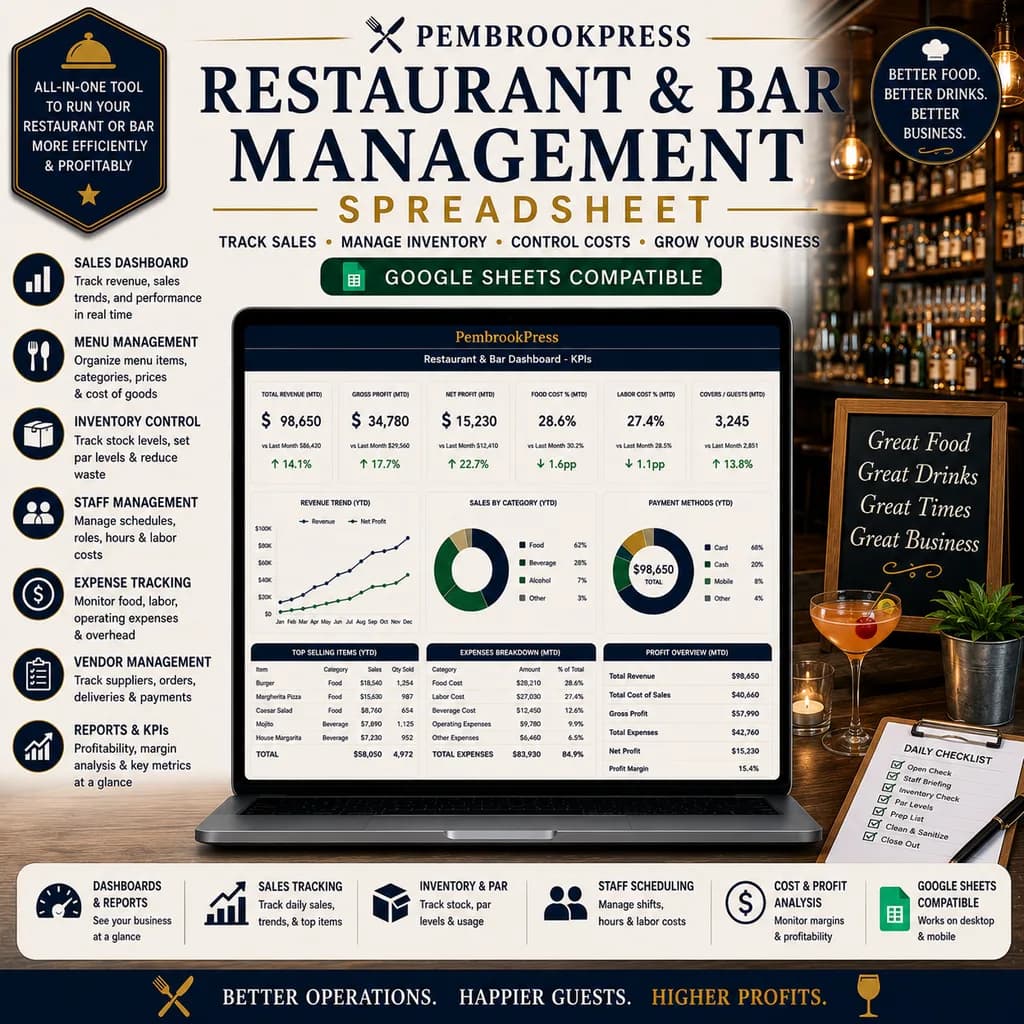
Menu cost per plate, daily sales log, COGS tracker, labor scheduling, and a vendor purchase log, the shift, in numbers.
- ✓ Excel + Google Sheets · instant download
- ✓ 30-day refund, no questions asked
- ✓ Works anywhere in Colorado
A restaurant lives and dies on food cost, labor cost, and check average. This workbook holds a menu cost sheet that prices every plate to the ingredient, a daily sales tracker, inventory and COGS that ties back to the menu, and labor scheduling that respects payroll caps. The vendor purchase log makes the reorder call obvious.