How to Build a Budget That Actually Sticks in 2026
Most budgets fail in week three. Here's the no-nonsense method to build a monthly budget spreadsheet you'll still be using in December.
You don't have a willpower problem. You have a budget that lies to you.
Most budgets fail in week three because they were built on a fantasy version of your life, the one where you don't buy lunch out, don't grab gas station coffee, don't have a kid who needs a $42 birthday gift for a classmate by Friday. The numbers looked clean in January. By February they were lipstick on a deficit. By March, the spreadsheet was a guilt machine you stopped opening.
A budget that sticks is built differently. It starts from what your money actually does, not what you wish it did. It plans for the friction of being a human. And it lives somewhere you'll actually look at it more than once a month.
Here's how to build one.
Stop budgeting the future. Audit the past first.
The single biggest mistake people make is building a budget before they've looked at their last 90 days of spending. They guess at categories, "$300 for groceries, $80 for gas, $50 for fun", based on what feels reasonable, then panic when reality comes in at 1.7x.
Pull three months of statements. Every account. Every card. Export to CSV if you can, screenshot if you can't. Now sort every transaction into seven buckets and seven only:
- Fixed, rent, mortgage, insurance, loan minimums, anything you can't change this month
- Subscriptions, streaming, software, gym, memberships, cloud storage, the random $9 charge you forgot about
- Utilities, power, water, internet, phone (these vary, but they're non-optional)
- Groceries, food you cook
- Eating out, food you don't cook, including coffee shops and DoorDash
- Transportation, gas, parking, transit, rideshare, car maintenance
- Everything else, clothes, gifts, Amazon, kid stuff, hobbies, the impulse buys
Add it up. The total, not what you think you spend, what you actually spend, is your real cost of living. Anything else is fiction.
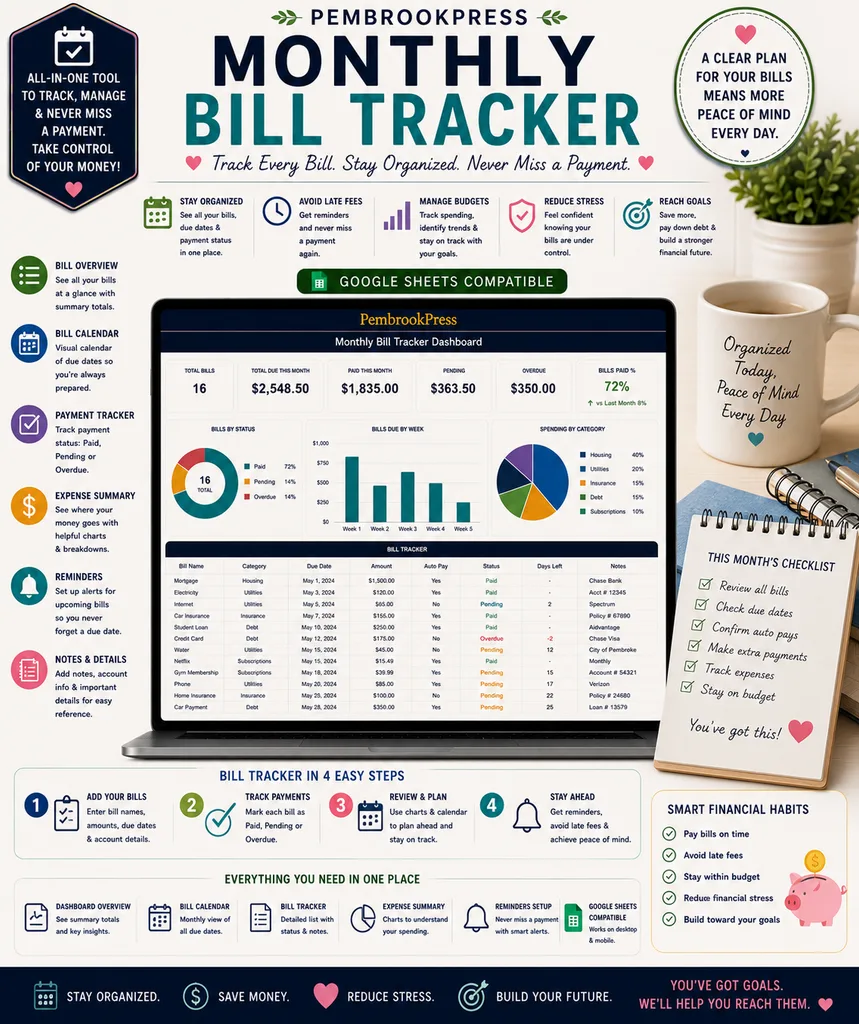
The Monthly Bill Organizer & Payment Tracker was built specifically for this first pass. It lays out every recurring bill, calculates your true cost of living, and surfaces the subscriptions you forgot you were paying for. Most people find $40 to $120 a month they can cancel before they've even started a real budget.
Build the budget around your bills, not your goals
This is where most "budget gurus" lose people. They start with goals, pay off debt, save for a house, max the Roth, and back-solve. But goals don't pay your electric bill.
A budget that sticks works in this order:
- Fixed bills first. These are non-negotiable and you already know them.
- Variable essentials next. Groceries, gas, utilities. Use your 90-day average plus 10%.
- Sinking funds third. Car registration, Christmas, annual insurance, the dentist visit you've been putting off, these aren't emergencies, they're predictable expenses you pretend are surprises. Divide the annual total by 12 and budget that amount every month.
- Goals fourth. Debt payoff, savings, investing, whatever's left after the above is yours to allocate aggressively.
- Fun money last. Yes, last. But not zero. A budget with zero fun money is a budget you'll abandon the first time a friend texts about dinner.
The order matters. If you start with goals, your fixed bills feel like obstacles. If you start with bills, your goals feel like rewards.
Plan for the months that wreck you
Every household has three or four months a year that quietly destroy the budget. December is obvious, gifts, travel, the office party Secret Santa, the kid's teacher gifts. But there's usually also the back-to-school month, the property tax month, the summer-vacation-and-camp month, and the spring-everyone-needs-a-physical month.
If you don't plan for these, they each become a $400–$1,500 surprise that goes straight onto a credit card.
The fix is sinking funds. A sinking fund is just a labeled savings bucket you contribute to every month so the big expense doesn't hit all at once. Christmas costs you $900? That's $75 a month starting in January. Car insurance renews at $1,400 every six months? That's $234 a month set aside.
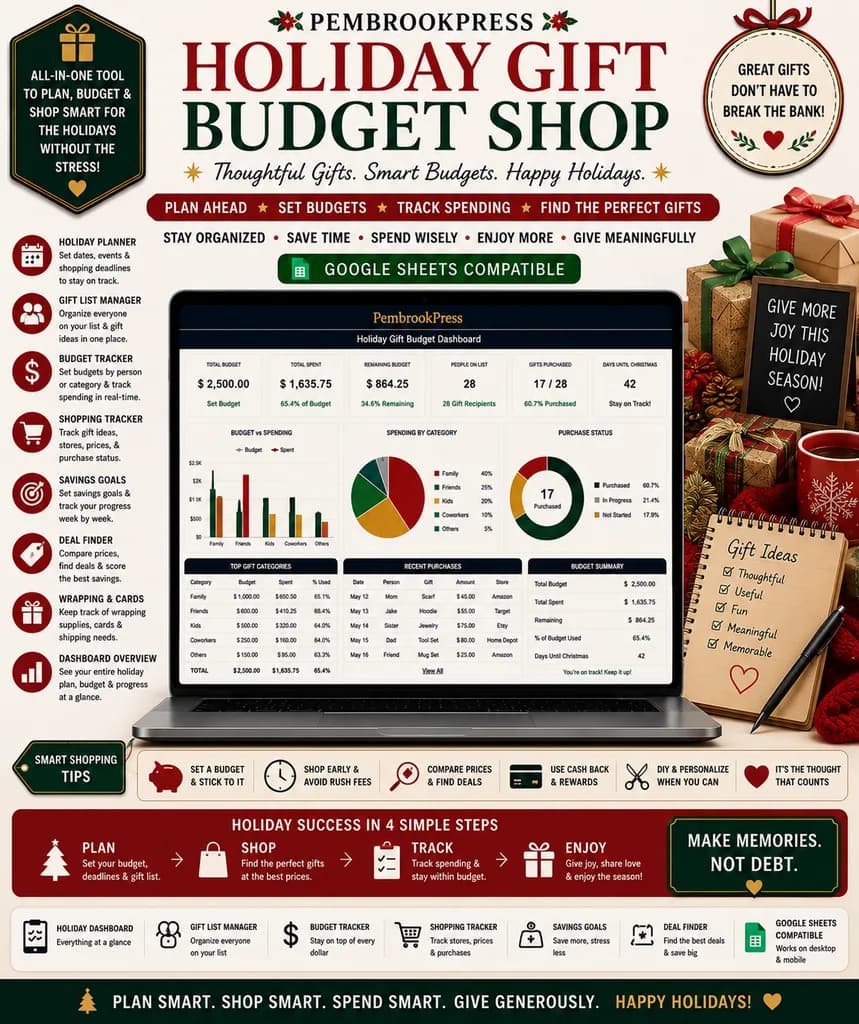
The Holiday Gift Budget & Shopping Planner handles the worst offender. December, by letting you list every recipient, set a per-person budget, track what you've bought, and see your total trending against the cap in real time. People who use it tend to spend 20–30% less without feeling like they cheaped out, because the spending is intentional instead of panicked.
Match the tool to your life
A college student's budget and a four-person family's budget are not the same animal, and trying to force one template to do both is why so many free spreadsheets feel useless. The categories are wrong. The cash flow rhythm is wrong. The pain points are different.
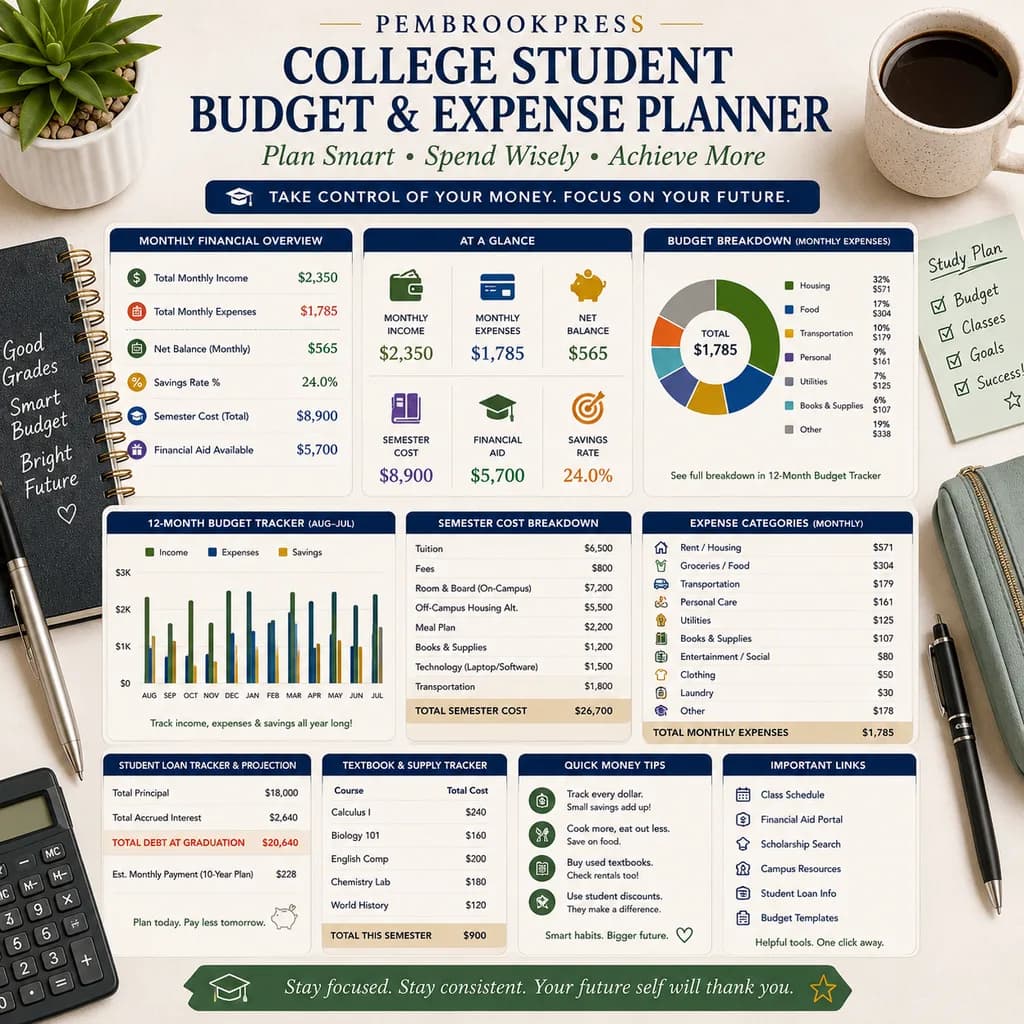
If you're an undergrad or grad student, your money problem isn't really monthly, it's the gap between your loan disbursement in August and the next one in January. You need a semester view, not just a monthly one. You need to see whether the financial aid check will actually cover the rent, the groceries, and the books through December, or whether you need to pick up another shift now. The College Student Budget & Expense Tracker is built around that semester cash flow specifically, tuition, books, rent, food, fun money, and a forecast that tells you the truth about whether the loan will last.
If you're running a household with kids, the budget needs to account for cash flow across paychecks (not just monthly totals), shared expenses between partners, and the weekly grocery reality that no single number can capture. The Family Budget & Cash Flow Planner handles paycheck-to-paycheck timing, so you can see that yes, the mortgage and daycare both hit on the 1st, and no, you don't actually have $800 free that week even though the monthly math says you do.
Use the tool that matches your life. A budget that's the wrong shape for your reality is just decoration.
Make checking your budget a 90-second weekly habit
The single highest-leverage budget habit isn't building the perfect spreadsheet. It's looking at the imperfect one every Sunday for 90 seconds.
Open the file. Update last week's spending. Glance at what's coming up this week. Adjust if needed. Close it.
That's it. No deep analysis, no shame spiral, no rebuilding from scratch. Just a brief touch that keeps the budget alive instead of letting it rot into a January artifact.
Three things make this habit stick:
- Calendar it. Sunday at 7pm, before the week starts. Recurring reminder. Treat it like a meeting with your money.
- Make it easy. Bookmark the file. Pin it on your phone home screen if it's a Google Sheet. The 30 seconds it takes to find the file is the 30 seconds you'll use as an excuse to skip.
- Pair it with something pleasant. Coffee, a glass of wine, the first 10 minutes of the football game. The budget review is the price of admission to the nice thing.
People who do the 90-second weekly review almost never have a runaway month. People who don't almost always do.
Your first 30 days
Don't try to optimize on day one. Aim for accuracy. Track every dollar for 30 days using whatever bucket system makes sense, your real spending, not your aspirational spending. At day 30, you'll have something most people never have: a budget built on data instead of hope.
From there, you can cut, redirect, automate, and aim at the goals you actually care about, paying off the card, building the emergency fund, saving for the down payment, finally taking the trip. But all of it starts with looking honestly at where the money goes.
Start with the bills
If you're going to do one thing this week, audit your recurring expenses. The Monthly Bill Organizer & Payment Tracker gets you there in an afternoon, every bill in one view, due dates, subscription audit, real cost of living. Once that's clear, the rest of the budget falls into place. The fantasy version of your finances is what's been costing you. The honest version is what sets you free.
Monthly Bill Organizer Payment Tracker
Due dates, payment methods, a subscription audit tab, and an annual expense forecast, nothing slips through.